
How to size a commercial dough mixer for bakeries: ZMH-15 to ZMH-100 flour capacity, 2.2 to 9 kW power, 60 percent absorption and footprint checks.
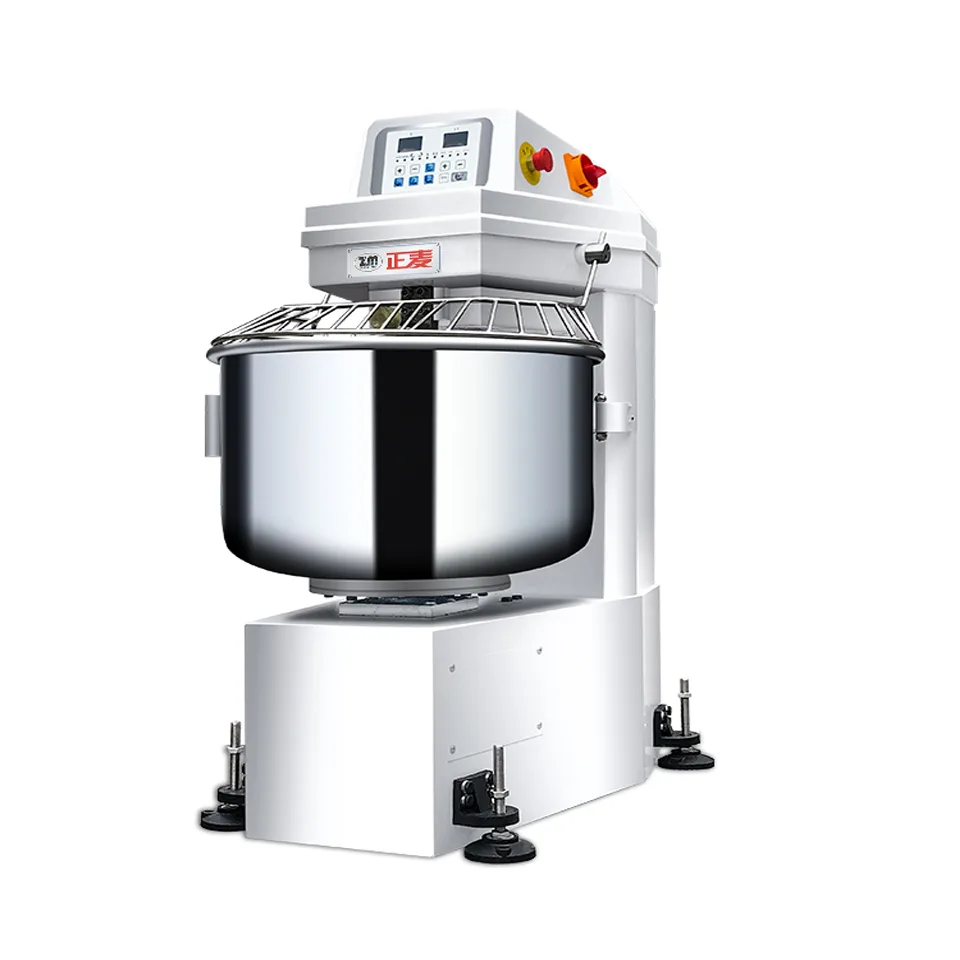
A commercial dough mixer is sized on flour weight per batch, not on bowl volume, and that single number decides the rest of the bakery line. The Huayi ZMH series runs five models, at 15 kg, 25 kg, 50 kg, 75 kg and 100 kg of flour per batch, powered from 2.2 kW to 9 kW, with a water absorption ceiling of 60 percent. Bowl, hook and safety guard are SUS304; the frame is 4 mm welded steel plate; the panel is touch-screen. This article uses the ZMH-50, at 50 kg flour, 4.5 kW and 400 kg net weight, as the worked example, because that is where most small and mid-size bakery projects land. Final specifications should be confirmed according to the selected model and supplier documentation.
Key Takeaways
- Size on flour per batch first, then convert: 50 kg of flour at 60 percent absorption leaves roughly 80 kg of dough, and that 80 kg is what your divider and proofer actually receive.
- The ZMH-50 draws 4.5 kW and weighs 400 kg; its body is 560 x 1090 x 1205 mm, so budget clear floor on the bowl side for loading and for pulling the bowl out.
- Power steps are 2.2 kW at 15 kg, 3 kW at 25 kg, 4.5 kW at 50 kg, and 9 kW at both 75 kg and 100 kg. The flat step between 75 kg and 100 kg tells you which two frames share a motor.
- Stiffer dough loads the hook harder than wet dough. At 45 percent hydration, treat a 50 kg machine as a 40 kg machine rather than pushing it to the nameplate figure.
- Bowl, hook and guard in SUS304 are the surfaces dough and washdown water touch. Painted frames are fine; painted contact surfaces are not.
- Price, MOQ, lead time, warranty, installation scope and site survey terms are quote items. Ask for them in the same message as the layout drawing.
What This Equipment Is Used For
A dough mixer hydrates flour, develops the gluten network and delivers one homogeneous batch to the next station. In a bakery that station is a divider, then a rounder, then the proofer. In a central kitchen the chain usually bends: dough leaves the mixer for a sheeter, a bun line or a dumpling machine, and the mixer has to hold consistency across a shift rather than across a single bake.
The ZMH range spans 15 kg of flour to 100 kg. Those two machines carry the same category label and share almost nothing else. A ZMH-15 weighs 180 kg and runs a 2.2 kW motor on a 420 x 960 x 1050 mm body. A ZMH-100 weighs 690 kg, runs 9 kW and stands 590 x 1350 x 1420 mm. Between them the floor changes, the door width changes, and the number of operators who can work the bowl changes.
Buyers usually arrive at this decision holding a recipe and a daily output target. Neither is a machine specification yet. The specification comes from converting both into kilograms of flour per batch and batches per shift.
Match a Commercial Dough Mixer to Daily Dough
Start from the flour number, not the dough number. Bakeries quote production in finished bread or in dough weight, and both inflate the figure the mixer is judged on. A 300 kg dough target is not a 300 kg mixer; at 60 percent absorption it is about 187 kg of flour, spread over a shift.
Then count batches. A full cycle on a bowl-and-hook machine includes loading, mixing, a rest and discharge, and it is the cycle that decides throughput, not the motor. Ask the supplier for cycle time on your own dough rather than on a test dough, because a 55 percent hydration bun dough and a 45 percent bagel dough do not run at the same speed through the same hook.
That is where the ZMH-50 earns its place in most projects. Six batches of 50 kg flour across an eight-hour shift gives 300 kg of flour, about 480 kg of dough at 60 percent absorption, and one operator can keep that rhythm. Move to 75 kg per batch and the arithmetic improves, but the machine goes from 400 kg to 660 kg and the mixer starts to dictate the building rather than the schedule.
How to Choose the Right Model
Calculate Production Capacity
Work backwards from the oven, then forwards from the mixer. If the shop bakes 2,400 pieces of 80 g bread in a day, that is 192 kg of dough, about 120 kg of flour, and the ZMH-25 at 25 kg per batch will need five batches to cover it with room for a retry. Two shifts on the same oven double the flour to 240 kg and push the choice to the ZMH-50, because five batches per shift is a comfortable rhythm while ten is not.
Central kitchens should add a second variable: variety. A kitchen producing buns, dumplings and pizza bases runs short batches of different doughs, and changeover time between them eats capacity faster than any motor limit. In that layout a 50 kg machine that changes dough three times a day outperforms a 100 kg machine that cannot.
Match Motor Power to Water Absorption
The ZMH table rates every model at 60 percent water absorption or below. That figure is not a flavour note; it is the load case the hook, shaft and 4 mm frame were drawn for. Dough at 45 percent hydration is stiff, resists the hook and puts torque through the drive for longer. Dough at 65 percent is wetter, climbs the hook and needs a different mixing strategy altogether.
In practice, buy one frame size up when the recipe sits at the stiff end, and do not plan to run the top of the capacity range all day. A ZMH-50 held at 40 kg per batch of stiff dough will outlast the same machine run at 50 kg of the same dough, and the price difference between frames is smaller than the cost of a drive replacement in the middle of a season.
Specify Food Contact Materials
Bowl, hook and guard are SUS304 on every ZMH model, which is the minimum most export buyers should accept for a wet, salty, acidic environment. Ask for the material declaration rather than the word stainless, and name the standard you need it declared against: GB 4806.9-2016 for stainless steel food contact materials in China, FDA 21 CFR Part 177 to 179 for the United States, and Regulation (EC) No 1935/2004 for the European Union.
Look at the non-contact parts too. The frame is 4 mm steel plate, welded, which survives a washdown hose far better than folded sheet. The guard carries an auto power-off interlock; on a machine that kneads 50 kg of dough at 4.5 kW, that interlock is the difference between a guard and a decoration.
Plan Cleaning and Maintenance
Daily cleaning means the bowl comes out, the hook comes off, and both get washed away from the drive. Confirm the bowl release before you buy, and confirm that the electrical panel sits above the washdown line rather than under it. The ZMH series uses US belts and Japanese bearings, which is useful mainly because both are obtainable outside China; ask the supplier to list the belt and bearing part numbers in the manual so a local factor can match them.
Spares worth holding: one belt set, one bowl seal, one emergency stop button. On a 400 kg machine these are small items and they are also the three failures that stop production on a Monday morning.
Coordinate the Mixer With Proofing and Sheeting
The mixer only sets the pace if the next station can absorb it. A 50 kg batch has to fit the proofer and the sheeter that follow, or the dough waits and the schedule collapses. Huayi's proofing room host machine, the ZMX-8T, takes 6 to 8 carts, which sets a batch ceiling no mixer specification will show you, and the Q50 dough sheeter runs a 0 to 30 mm roller with a 500 mm conveyor and a 6 kg dough capacity per pass.
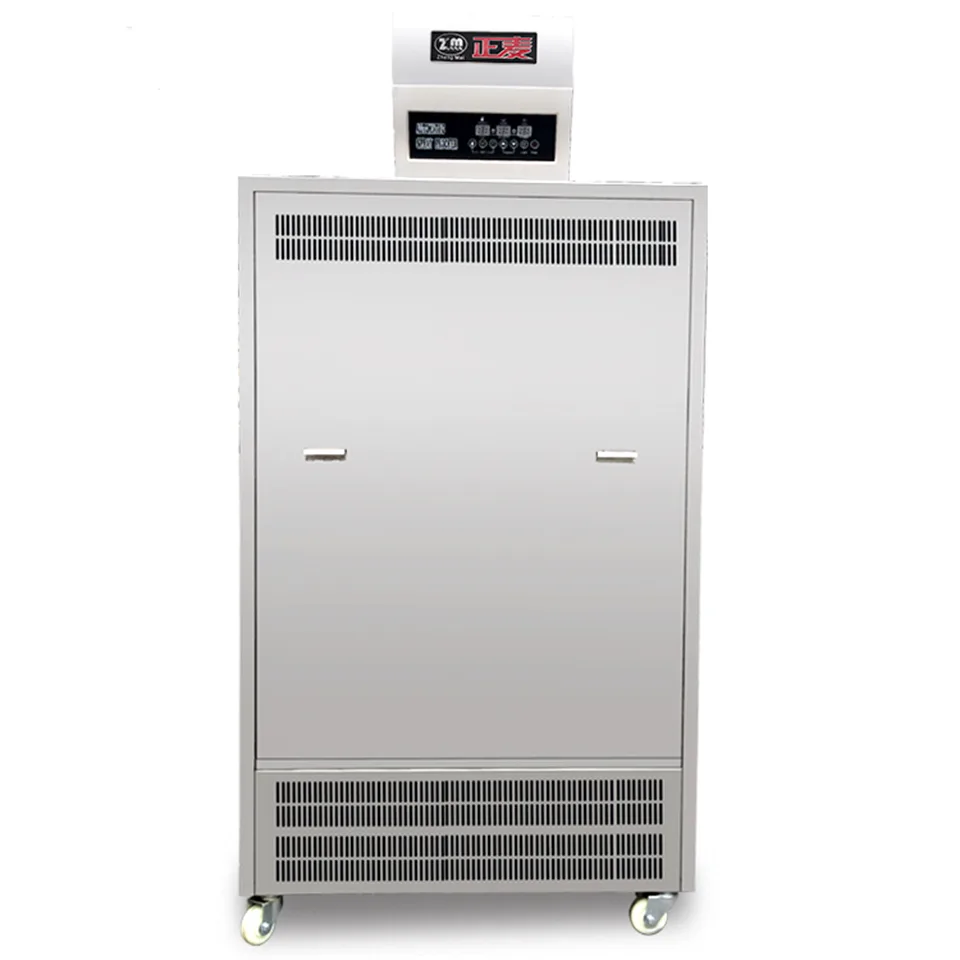
Line the three numbers up before ordering: flour per batch at the mixer, carts at the proofer, kilograms per pass at the sheeter. The smallest of the three is the real capacity of the line, and it is rarely the mixer.
Core Specifications Buyers Should Compare
| Specification | Why It Matters | What Buyers Should Check |
|---|---|---|
| Flour capacity | It sets dough weight per batch and the whole downstream line. | Confirm the figure is flour, not dough: ZMH-50 means 50 kg of flour, roughly 80 kg of dough at 60 percent absorption. |
| Motor power | It decides whether stiff dough stalls the batch or the drive. | 2.2 kW at 15 kg, 3 kW at 25 kg, 4.5 kW at 50 kg, 9 kW at 75 kg and 100 kg. |
| Water absorption rating | It is the load case the hook and frame were designed for. | All ZMH models are rated at 60 percent or below. Recipes outside that band need a frame size up. |
| Footprint and weight | Floor loading, door width and clear working space all follow from it. | ZMH-50 is 560 x 1090 x 1205 mm at 400 kg; ZMH-100 is 590 x 1350 x 1420 mm at 690 kg. |
| Food contact material | Wet, salty dough attacks anything less than stainless. | Bowl, hook and guard in SUS304, with a material declaration against GB 4806.9-2016, FDA 21 CFR 177 and EC 1935/2004. |
| Guard and interlock | An open bowl at 4.5 kW is an injury, not a delay. | Safety guard with automatic power-off, tested at acceptance with the bowl running. |
| Control panel | Batch memory is what keeps Tuesday's dough identical to Monday's. | Touch-screen panel, stored programs per dough type, and a manual override for service. |
One sentence belongs in every quotation: final specifications should be confirmed according to the selected model and supplier documentation. Website tables are a starting point, and the nameplate drawing is the binding document.
Buyer Checklist
- Confirm daily flour need in kilograms, not finished product weight.
- Confirm dough types and the hydration range, then check the 60 percent rating against the stiffest recipe.
- Confirm batches per shift and the cycle time on your own dough, in writing.
- Check the footprint against the room, including 800 mm of clear space on the bowl side.
- Check floor loading for a 400 kg or 690 kg machine, and the door width for the crate.
- Ask for the nameplate drawing showing voltage, phase and current for your market.
- Ask for the food contact material declaration and the belt and bearing part numbers.
- Confirm what the price includes: crating, freight terms, installation, training and warranty period.
Common Mistakes to Avoid
The first mistake is buying on bowl litres. Bowl volume tells you how much steel the supplier used. Flour capacity tells you what the machine will do, and only one of the two appears in a production plan.
The second is quoting dough weight as flour weight. A buyer who needs 300 kg of dough and orders a 300 kg machine has bought something roughly twice the size required, and will run it at 40 percent load for its whole service life.
The third is ignoring the building. A ZMH-100 is 690 kg standing on 590 x 1350 mm, and it arrives in a crate larger than that. Floors on mezzanines, lifts, and 900 mm doorways are where these projects lose a week.
The fourth is treating the guard interlock as a paperwork item. It is the one feature that gets tested on the first day and relied on for the next ten years.
The fifth is assuming the mixer price is the line price. Mixer, proofer carts, sheeter and installation are four separate quotations, and the cheapest mixer is often the one that forces the most expensive proofer.
FAQ
Q:What is the difference between flour capacity and bowl volume?
A:Flour capacity is the weight of flour one batch can develop, which is what production planning needs. Bowl volume is a geometric figure. On the ZMH-50 the useful figure is 50 kg of flour, roughly 80 kg of dough at 60 percent absorption.
Q:How many batches per hour can a ZMH-50 run?
A:It depends on cycle time, which depends on your dough. A full cycle includes loading, mixing, rest and discharge. Ask the supplier for the cycle time on your recipe; do not plan capacity from the motor power.
Q:What water absorption can the ZMH series handle?
A:All five models are rated at 60 percent or below. Stiffer dough within that band is acceptable but loads the drive harder, so step up one frame size when running at the top of the capacity range.
Q:What power supply does a commercial dough mixer need?
A:The ZMH table gives motor power from 2.2 kW to 9 kW. Voltage, phase and starting current are set per destination market and must be confirmed on the nameplate drawing; do not assume a website figure covers your supply.
Q:How do I clean a stainless bowl and hook?
A:Remove the bowl and hook, wash them away from the drive and panel, and leave the frame dry before the next batch. Confirm the bowl release and the panel position before you buy, because both decide how long cleaning takes.
Q:Can one mixer handle both bread and pastry dough?
A:Usually yes within the 60 percent absorption rating, but the changeover is what costs time. A kitchen running three dough types a day should size on batches per shift, not on the largest batch it might ever mix.
Sources and References
- Codex Alimentarius CXC 1-1969, General Principles of Food Hygiene, revised 2020 — hygiene requirements for equipment surfaces in contact with food.
- GB 4806.9-2016, National Food Safety Standard: metal materials and products in contact with food — stainless steel grade and migration limits.
- FDA 21 CFR Part 177 to 179 — indirect food additives covering food contact surfaces and equipment.
- Regulation (EC) No 1935/2004 on materials and articles intended to come into contact with food.
- HSE (United Kingdom), Provision and Use of Work Equipment Regulations 1998 — guarding and interlock guidance for bakery machinery.
Related Examples
- ZMH series dough mixer, 15 kg to 100 kg
- ZMH automatic bowl tipping dough mixer, 50 kg to 150 kg
- Q50 commercial dough sheeter, 0 to 30 mm roller
- ZMX-8T proofing room host machine, 6 to 8 carts
- Baking equipment category
- Fermentation cabinet category
- Contact Huayi Equipment for a quotation
Conclusion
The decision order is short: flour per batch, then batches per shift, then the stiffest dough in the range, then footprint and floor loading, then the guard and the material declaration — and price last, because it is the only item on the list that changes nothing about the outcome. The ZMH-15 through ZMH-100 covers the range with one motor step shared between 75 kg and 100 kg, which is where buyers usually over-buy. Price, MOQ, lead time, warranty and site survey terms are quote items and belong in the same request as the layout drawing. Send your daily flour weight, dough types and room dimensions to start that conversation. Final specifications should be confirmed according to the selected model and supplier documentation.
Published: 28 October 2026. Author: Su Tao, Shunxiang Central Kitchen and Huayi Intelligent Equipment.
苏涛;舜翔央厨、华艺智能