
Batch produce washing for fresh-cut salad lines: 20–30 kg loads, 3–5 minute cycles, 380V/50Hz, and how load weight swings output by 50% on the same machine.
A batch vegetable washer can fit fresh-cut salad production when its 20–30 kg batch rhythm, floor space, power supply and handling flow are planned around the cutting and dewatering stations it serves.
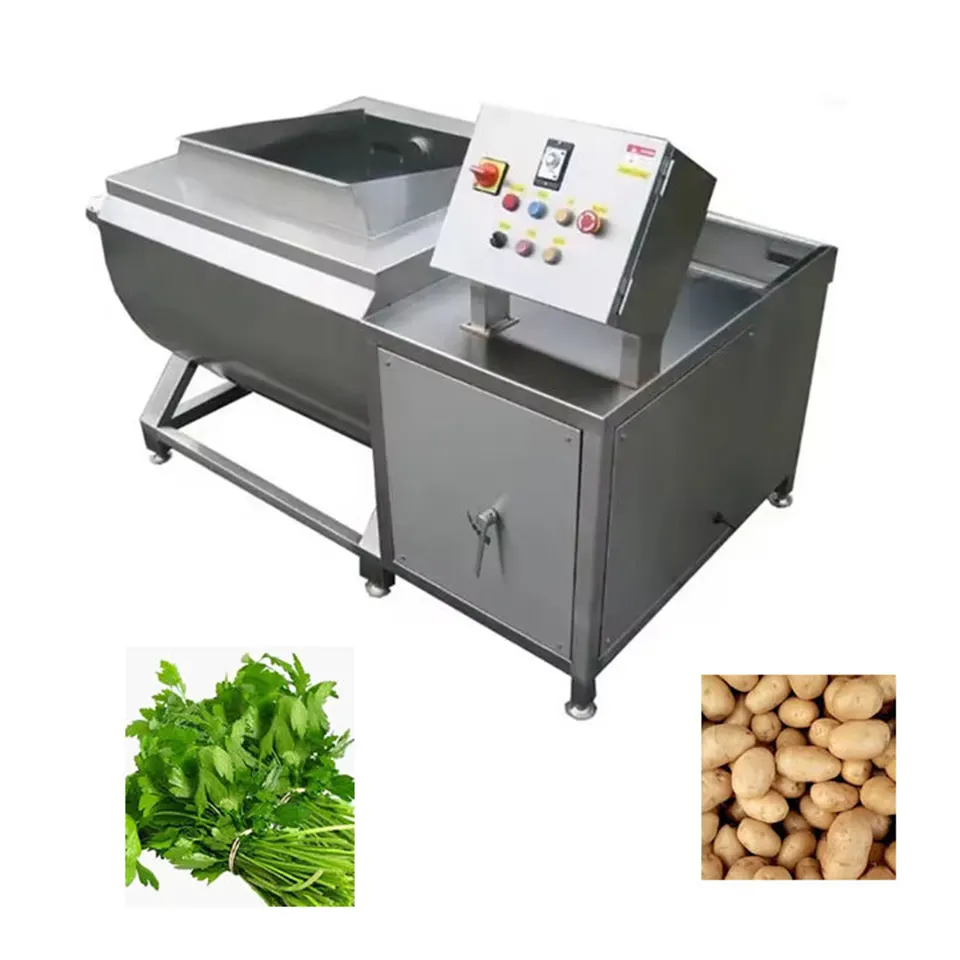
A batch washer fits fresh-cut salad production when its cycle rhythm matches the cutting and dewatering stations around it. In a small or mid-size line, whole heads come from the cold room, are trimmed, washed, cut, dewatered and packed, and each station sets the pace for the next. A batch washer adds a machine that works in discrete 20–30 kg loads. The useful question is how well the handoffs on each side are planned. A well-planned wash cell can handle a mixed SKU list; a poorly planned one leaves operators moving crates around the machine all shift.
| Typical batch load | 20–30 kg per cycle |
|---|---|
| Wash cycle | 3–5 minutes |
| Installed weight | 380 kg |
| Power supply | 380V / 50Hz |
| Body material | 304 stainless steel |
| Footprint | 1750 × 1100 × 1100 mm |
Where a batch washer fits in a fresh-cut salad line
In a small or mid-size fresh-cut operation, the pre-processing station runs a short sequence: receiving and trimming, washing, cutting, dewatering, then packing. The washer sits between the trimming bench and the cutting table so produce reaches the blades clean. Some lines also add a short second wash after cutting, just ahead of the spin dryer, to rinse cut surfaces before dewatering. Either way, the washer is a station in the middle of a chain. That position makes the batch machine a pulse in the line. Product arrives in loads: 20–30 kg goes in, the cycle runs 3–5 minutes, the load comes out, and the next batch starts. The cutting team needs a small buffer of washed product waiting for it, plus space to stage the next load. Lay out the wash station as a two-sided cell with a load side and an unload side, and keep enough clear floor for one or two crates or trolleys of staged produce. The TY106 from Huayi Equipment is a batch single machine, not a continuous belt, sorting or peeling line. It fits that role; plan its load and unload sides so operators can feed it from the prep bench and empty it into the next step.
Matching 20–30 kg batches and 3–5 minute cycles to fresh-cut output
Kilograms per hour matter on paper, but rhythm matters on the floor: how often a fresh load of washed produce reaches the cutting station. The two figures are related, and the gap between them is where many batch washing plans go wrong.
1. Estimate practical throughput from loading, washing and unloading time
Start with the cycle time, then add everything around it. A 3–5 minute wash is only the machine cycle; loading 20–30 kg, pulling the finished batch out, and moving it to the cutting station all take operator time. The planning formula is: batches per hour = 60 ÷ (wash time + load time + unload time + transfer time). If the wash runs 4 minutes and handling adds 3, you get about 8.6 batches per hour, which at 25 kg per batch is roughly 215 kg of washed produce per hour. Run the same arithmetic with your own handling times and average load weight. The difference between a 20 kg and a 30 kg average load is a 50% swing in output from the same machine, so average load weight deserves as much attention as cycle time. Then compare that figure with what sits downstream. If the cutting team and the spin dryer can absorb more than the washer produces, the washer is the bottleneck; more washing capacity or a longer shift solves it. If the washer outruns cutting, you need buffer space rather than more washing capacity. The wash rhythm sets the pace for the whole pre-processing station, so size the staging area before you order the machine.
2. Separate washable produce types from fragile produce needing trials
Most fresh-cut lines run a mix, and a batch washer handles that mix unevenly. Firm, high-volume items are the usual starting point: iceberg and romaine heads, cabbage, carrots, potatoes, cucumbers and peppers. They suit bulk staging and give the cutting station a sensible 20–30 kg unit to work from. Hardy leafy items such as kale and chard often sit in the same scheduling group. Fragile produce needs a different plan. Soft berries, microgreens, tender herbs and very fine cut leaf pieces can bruise, crush or take on water during a full wash, so run a trial with your own product before committing a whole SKU. The same applies to cut lettuce if your line washes after cutting rather than before. A practical habit is to build the weekly wash schedule around the hardy items that run reliably, and treat fragile products as trial-gated additions. That keeps the machine working at its rated batch size and stops one delicate SKU from setting the pace for everything else on the list.
Planning floor space, power and water flow around the washer
The TY106 has a 1750 × 1100 × 1100 mm footprint and weighs 380 kg. The dimensions define the machine; the space you actually need includes a loading position, an unloading position, room for staged crates, and a clear walkway for the operator. Measure the station with a crate or trolley in place, not just with a tape run along the wall. The 380 kg weight decides where the machine can go. A ground-floor slab is straightforward, while a mezzanine or raised platform needs a structural check before delivery day. Power is a fixed decision on this model. The TY-106 runs on 380V/50Hz power. Plan a dedicated supply at the station rather than a cable run from a nearby socket. If your site runs a different voltage or frequency, raise it at the enquiry stage and get the electrical configuration confirmed in writing. Plan the water supply and drainage at the station. Ask food processing machinery suppliers to put per-cycle water use, flow rate, drain size and cleaning method in the written quotation. Confirm the connection details to your cutting and dewatering stations in the same document. The body is 304 stainless steel. Plan the wet zone for routine washdown: slope the floor or cut a channel so water runs away from where the operator stands. Leave service access around the machine and keep crates clear of the connections.
Conclusion
For a small or mid-size fresh-cut salad line, batch produce washing equipment can be a practical pre-processing station component when it is planned as a cell rather than a box on the floor. Work out the real rhythm from loading, washing, unloading and transfer time. Match the batch size to what the cutting station can absorb. Keep fragile SKUs behind a trial, and settle footprint, floor loading, the 380V/50Hz supply and water connections before the machine ships. When you request a quotation from vegetable washing machine manufacturers, include your target output, available floor space and the layout of your existing cutting and dewatering stations. Ask for the water use, drain interface and cleaning method alongside the quotation, and confirm the line connection details in writing.
FAQ
Q: Can a batch vegetable washer fit into a fresh-cut salad line?
A: Yes. It usually sits between trimming and cutting, or just ahead of the dewatering station if the line washes after cutting. Treat it as a cell with staged crates on the load and unload sides so the cutting team receives a steady supply of washed product between cycles.
Q: How should I calculate throughput for 20–30 kg batches with 3–5 minute cycles?
A: Divide 60 by the total turn time—wash cycle plus loading, unloading and transfer—to get batches per hour, then multiply by your average batch weight. A 4-minute cycle with 3 minutes of handling gives about 8.6 batches per hour, or roughly 215 kg at 25 kg per load.
Q: Which fresh-cut vegetables need a trial before using a batch washer?
A: Start with firmer items such as romaine and iceberg heads, cabbage, carrots, potatoes and peppers. Run a trial first on soft berries, microgreens, tender herbs and fine cut leaf pieces, since these are more likely to bruise or take on water during a full cycle.