
A stainless steel worktable line, an all-stainless machine claim and food-grade paperwork are three different things. How to tell them apart.
Introduction: Stainless steel wording on a meat bone saw can describe one part, a whole machine, or a document set, and each layer answers a different buying question.
A buyer comparing two commercial meat bone saws usually sees the same few phrases: stainless steel worktable, brushed surface, all-stainless structure, food-grade steel. They sit close together in the description, so they read like one claim. They are not. One names a single component, one describes the machine as a whole, and one belongs to paperwork you may never see unless you ask for it. Getting those layers apart is what lets you compare two machines on equal terms instead of comparing two paragraphs of marketing text.
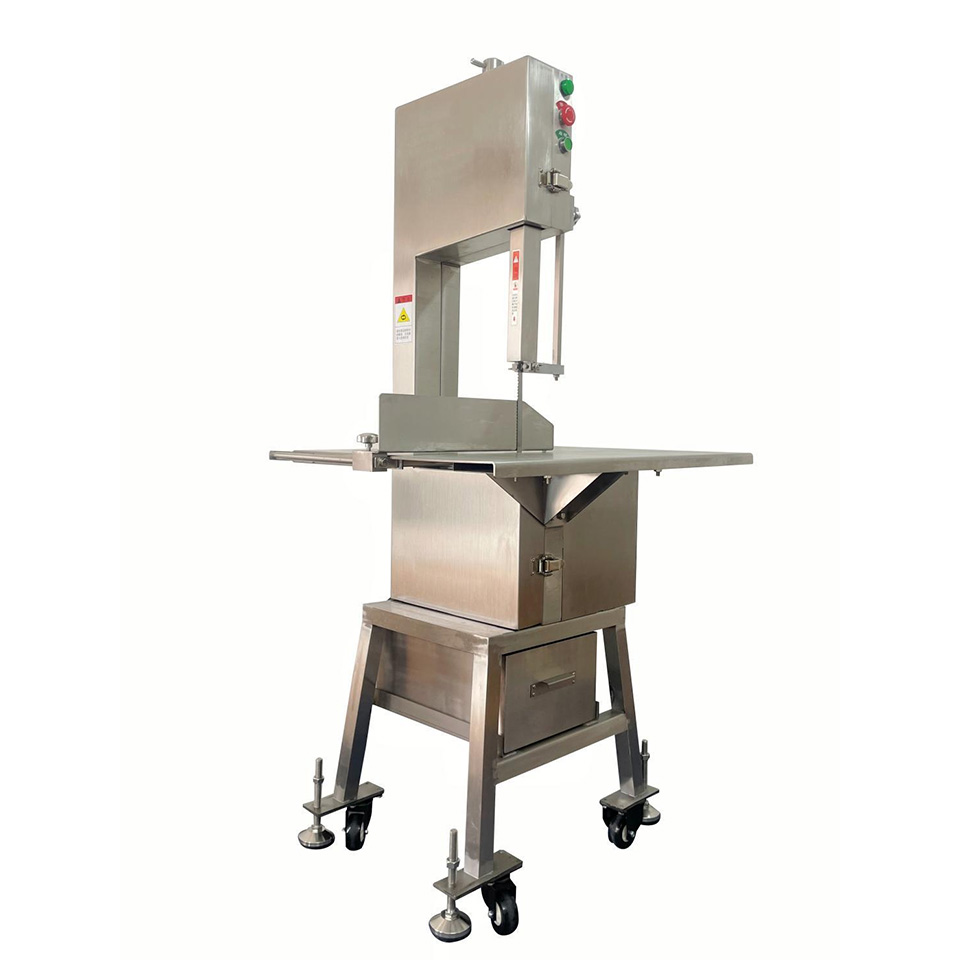
What a stainless steel worktable description tells a reader
The worktable is the platform that holds the product while the blade passes through. Calling that surface stainless steel is a statement about one component, and it is one of the more useful single facts in a machine description. Published details for the HC-95 include a stainless steel worktable of 80 × 63 cm and a brushed surface finish. Together, those two details describe the working area in material and in texture: a steel surface with a directional satin finish rather than a mirror polish. That combination is what most people picture when they think about meat equipment. A brushed finish reads as a working surface. It scatters light, it shows fewer visual marks than a polished face, and it looks like the steel benches and tables people already associate with food production areas. The FDA Food Code treats cleanable, moisture-resistant surfaces as a baseline expectation for equipment used around food, which is exactly why stainless steel wording draws attention in the first place. Buyers are not admiring a finish; they are checking whether the surface where product sits belongs to a material family that suits that job. What the statement covers is narrow, though, and this is where readers drift. A stainless steel worktable description covers the worktable. It tells you nothing about the frame, the motor housing, the blade, the guides, or the fasteners. Published HC-95 material wording also extends further, describing broader stainless steel and food-grade stainless steel coverage; the grades used, the exact list of covered parts, and the food-contact paperwork behind that wider phrasing are not confirmed. Read the worktable line as a solid fact about one surface and treat the rest as a separate question with its own answer.
How local part descriptions differ from full-machine material wording
Part wording and machine wording look similar on a screen and behave very differently when you try to use them. The clean way to separate them is to ask what each phrase is scoped to, because scope is what makes a material statement comparable between two machines.
Part-specific wording names one component and stops there. "Stainless steel worktable" or "brushed surface" tells you which part, and often which finish, without implying anything about the frame, guards, or blade guides. This is the easiest layer to compare across two models because both sides are talking about the same piece of metal.
Full-machine wording makes a broader statement, such as all-stainless structure or food-grade stainless steel construction. It is a bigger claim, and it only becomes usable once it is broken down part by part: which panels, which frame sections, which fittings, and which parts actually touch meat. Without that breakdown, two machines can both say "stainless steel" and mean very different amounts of steel.
Material grade and documentation sit on a third layer. A grade designation such as 304 or 316, a mill certificate, or a food-contact declaration is a paper or specification fact. It carries information that the words "stainless steel" cannot, because the same three words describe several different alloys with different compositions.
The reason this matters commercially is that descriptions do real work. Under the Uniform Commercial Code, a seller's description of goods can become part of what the seller affirms about them, so the exact wording carries weight for both sides of a sale. That is a general principle about how descriptions function, not a verdict on any particular machine. Practically, it means a vague machine-wide phrase and a specific part phrase are not interchangeable, and a buyer who treats them as interchangeable ends up comparing apples to a category label.
Why food-contact documentation is a separate question from surface appearance
Two worktables can look identical in a photo and still be different alloys. Brushed steel has a visual signature, not a chemical one: 201, 304, and 316 can all be finished to a similar satin look, and a photograph will not separate them. Appearance tells you the surface is metallic, reflective, and textured. It tells you nothing about which alloy is present or what it is rated for. Food-contact documentation answers a different question entirely. It is the paper trail that names the materials touching product and states the conditions those materials are intended for. In practice that means grade certificates, declarations of compliance for food-contact use, and any test reports a supplier holds for the specific parts in the product path. These documents exist or they do not, and they belong to the parts they name, not to the machine as a whole. On the HC-95, the published material wording is broader than the confirmed worktable detail, and the food-contact paperwork that would sit behind a food-grade phrase has not been confirmed. So keep the three layers apart when you read a description. Ask which parts are stainless, ask what grade those parts use, and ask which documents cover the surfaces that contact meat. The FDA Food Code gives general context on how cleanable food equipment surfaces are expected to behave; it is a model code for food establishments, not an approval of any machine. A supplier answer that addresses all three layers is a usable answer. A single sentence that says "food-grade stainless steel" is a starting point, and it is the buyer's job to walk it down to the parts and the paper.
Conclusion
A stainless steel worktable statement, a full-machine material statement, and food-contact documentation are three different things wearing similar words. The first is a specific, checkable fact about the surface where product sits. The second is a broad claim that only becomes useful once it is split into parts. The third is a document set that lives or dies by which parts it names. Comparing commercial meat bone saws gets much easier once you stop treating those three as one claim, and much more accurate once you ask each supplier to answer them separately.
FAQ
Q: What does a stainless steel worktable description cover on a meat bone saw?
A: It covers the worktable itself, the platform that holds product during the cut. On the HC-95 that means an 80 × 63 cm stainless steel worktable with a brushed surface. It is a solid, checkable fact about one component, and it says nothing about the frame, housing, blade, or guides.
Q: Does a stainless steel surface mean the whole machine is food-grade stainless steel?
A: No. A surface description names one part, while a food-grade claim covers a material grade and a scope of parts that has to be stated separately. Broader stainless steel and food-grade wording does appear in HC-95 material descriptions, and the grades, covered parts, and food-contact documents behind that phrasing are not confirmed.
Q: Why does material wording need to match the exact part?
A: Because scope is what makes two descriptions comparable. A worktable line and a whole-machine line describe different amounts of metal, and a grade certificate covers only the parts it names. Matching wording to parts turns a general phrase into something you can check against a second machine, a specification sheet, or a supplier's written answer.
Sources / References
Food Code 2022 | FDA
§ 2-313. Express Warranties by Affirmation, Promise, Description, Sample. | Uniform Commercial Code | US Law | LII / Legal Information Institute
Related Examples
HC-95 Elevated Table Meat Bone Saw
Further Reading
Meat Processing Technology for Small- to Medium-Scale Producers
Final specifications should be confirmed according to the selected model and supplier documentation.
Author: 苏涛;舜翔央厨、华艺智能