
Food processing machinery supplier scope in central kitchen projects: station mapping from washing to packing, utility data, and what shapes the quotation.
Food processing machinery suppliers for central kitchen projects are judged by the equipment scope they can map, the engineering information they release and the communication rhythm they sustain through design review.
A central kitchen project runs more smoothly when the machinery supplier maps equipment scope, utility requirements and design-review timing to the building schedule. By the time a central kitchen reaches quotation, the layout is usually fixed, the menu is set and the opening date is on the calendar. The the next RFQ details are about machinery scope: which stations the supplier covers, what engineering information comes with them, and how quickly answers return during design review. These points shape how cleanly the package prices and how many changes appear during installation. A supplier that can map the full flow—pre-processing, thermal processing, inspection, packing and support equipment—gives an engineering contractor more room to plan than a supplier quoting one machine at a time.
| Pre-processing | Washing, peeling, cutting, dewatering |
|---|---|
| Thermal stations | Jacketed kettles, retorts, combi ovens |
| Inspection and packing | Metal detection, weighing, packing |
| Support scope | Utilities, drawings, documentation, dispatch |
| Supply models | Single-machine supply or turnkey coordination |
| Quotation inputs | Output per shift, menu mix, room size, voltage, drainage |
What a central kitchen project expects from a food processing machinery supplier
A central kitchen asks more from a food processing machinery supplier than a unit price. The building has a fixed footprint, a menu with fixed outputs, an incoming power supply, drainage runs and a launch date. The supplier's job is to translate those constraints into equipment scope: which stations run in what order, how much floor each one loads, what each unit draws in power, water and steam, and where the interface points fall between machines. If that map is thin, the contractor carries the gap during installation: a washing station with no matched drain, a packing line wired for the wrong voltage, or an oven bank with no steam supply behind it. Hygienic design is the second expectation, and it determines which machines are acceptable in the first place. EHEDG guidance on cleanable construction is a practical reference when judging whether a washer or prep table can be opened, rinsed and reassembled without trapping food residue. That generally points buyers toward 304 stainless steel contact surfaces, smooth welds and drainage that clears completely. Machinery safety follows the same logic. Under the EU machinery framework, CE marking is tied to a conformity assessment route, so a supplier should provide declarations and manuals with the equipment list, not weeks after the container arrives.
Mapping equipment scope from pre-processing to packing and support
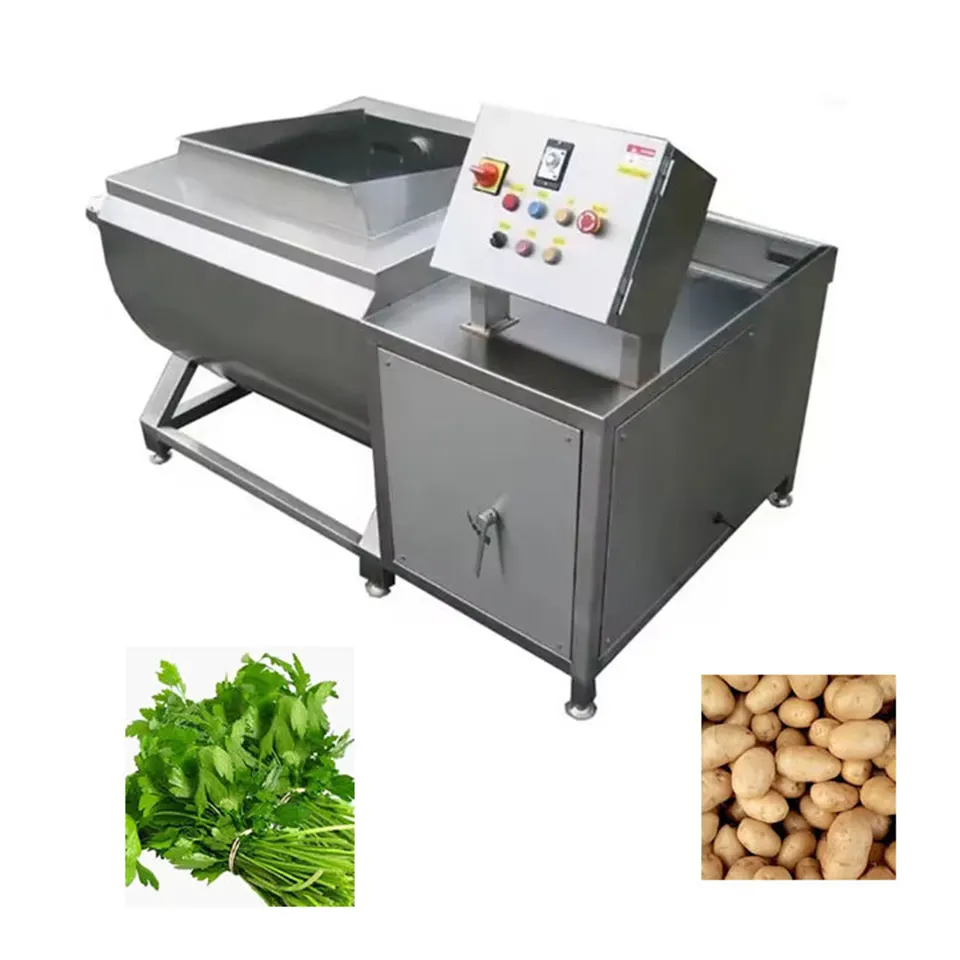
A workable scope map follows the product, not the catalogue. Vegetables move from washing, peeling, cutting and dewatering into thermal stations such as jacketed kettles, retorts or combi ovens, then past inspection equipment—metal detection, X-ray and checkweighing—and into vacuum, MAP or skin packing before cold chain equipment completes the flow. Steam generators, nitrogen generators and water treatment sit underneath all of it as support scope. For pre-processing, the contractor may compare vegetable washing machine manufacturers on batch size, footprint and utility needs, but that comparison covers only one part of the package. The TY106 batch vegetable washer provides concrete planning data: 20–30 kg per cycle, 3–5 minutes per cycle, a 304 stainless steel body, 1750×1100×1100 mm dimensions, 380 kg weight, 380V/50Hz power and a dual-pump setup of 2HP water pump plus 1HP hydraulic pump. Those figures let a contractor reserve floor space, drainage and power before the rest of the line is finalised.
1. Single-machine supply and turnkey coordination carry different responsibilities
Buyers should decide early which type of supply they are buying. Single-machine supply covers a defined unit, its specification, documentation and dispatch. The contractor owns the interface to the next station, the utility connection and the commissioning sequence. In a turnkey package, the supplier coordinates how stations connect, provides layout drawings and utility schedules, sequences installation and commissioning, and trains the operating team. Huayi Equipment works in both modes, with turnkey engineering support as a provided capability across pre-processing, thermal, packing and support equipment. The practical question for any quote is simple: does the price cover a machine, or a machine plus the coordination work around it?
2. Read cross-time-zone support against your own decision milestones
Support quality shows up between review cycles. A central kitchen design usually passes through layout sign-off, utility confirmation, equipment list freeze and shipping window, and each milestone needs supplier answers before the next meeting. Ask who the named technical contact is, what reply window they work to, and where the support team sits. Huayi Equipment runs international business and support centers in Shanghai and Guangzhou, an arrangement that can keep a review moving when the buyer's working day starts several hours before or after the factory's. A vague answer on contact and response time deserves attention, because slow replies during design review can slow commissioning later.
How supplier communication shapes project planning and quotation
The quality of a first quotation depends heavily on what the buyer sends. A request built around production targets per shift, menu mix, room dimensions, incoming voltage, water supply, steam pressure, drainage position, floor loading and destination port gives a supplier enough to build a real scope. Send a model name alone and you get a price for a box; send a project brief and you get an equipment list with capacities, footprints, weights and utility draws attached to each line. That difference matters most on larger packages, where one wrong assumption about steam or three-phase power can ripple through civil works and ventilation design. A well-structured reply also shows how the supplier thinks. Look for a per-unit schedule rather than a lump sum, documentation commitments including CE and ISO9001/ISO14001 evidence where relevant, a spare-parts plan, and a clear statement of what installation and training include. Huayi Equipment supports this stage from a 64,000 m² manufacturing base and holds ISO9001, ISO14001 and CE credentials. Commercial terms—price, MOQ, lead time and warranty—come back in the written quotation, so the conversation can stay focused on scope and sequence until commercial terms are confirmed.
Conclusion
Choosing food processing machinery suppliers for a central kitchen project comes down to scope clarity, engineering information and communication rhythm. A supplier that maps stations from washing through packing, hands over utility data and layout drawings, and answers within your review windows can expose coordination gaps before steel arrives. Start the formal quotation with a project brief rather than a model name, and ask directly which parts of the installation the supplier owns. Send your target capacity, room dimensions, incoming voltage and destination port to the Huayi Equipment team to request an equipment scope and quotation based on your building.
FAQ
Q: What equipment scope should a central kitchen project expect from a Product Customization supplier?
A: Expect a scope that follows the production flow: pre-processing equipment such as washers, peelers, cutters and dewatering units; thermal stations including kettles, retorts and combi ovens; inspection equipment such as metal detectors, X-ray units and checkweighers; packing machinery covering vacuum, MAP and skin packing; cold chain equipment; and support units such as steam generators and nitrogen generators. Each line should include capacity, footprint, weight and utility data so the contractor can plan the floor and services.
Q: How can a supplier support cross-time-zone communication for a central kitchen project?
A: Use a named technical contact, an agreed reply window and a review cadence tied to your milestones: layout sign-off, utility confirmation, equipment list freeze and shipping window. Suppliers with international support centers, such as Huayi Equipment's teams in Shanghai and Guangzhou, can cover review hours outside a single factory time zone. Ask for the contact name and response commitment in writing before design review starts.
Q: Where does a batch vegetable washer fit in a central kitchen equipment package?
A: It sits at the front of pre-processing, ahead of peeling, cutting and dewatering, and it sets the pace for the downstream line. The TY-106 handles 20–30 kg per cycle in 3–5 minutes, has a 304 stainless steel body, measures 1750×1100×1100 mm, weighs 380 kg, runs on 380V/50Hz and uses a 2HP water pump and 1HP hydraulic pump. That footprint and cycle rhythm let a contractor reserve floor space, drainage and power before the rest of the line is finalised.