
A batch vegetable washer in the fresh-cut produce workflow: 20–30 kg per cycle, 3–5 minutes, and how wet produce changes staffing at the next prep station.
A batch vegetable washer sits between receiving and cutting, and the way it hands produce onward shapes every fresh-cut step that follows.
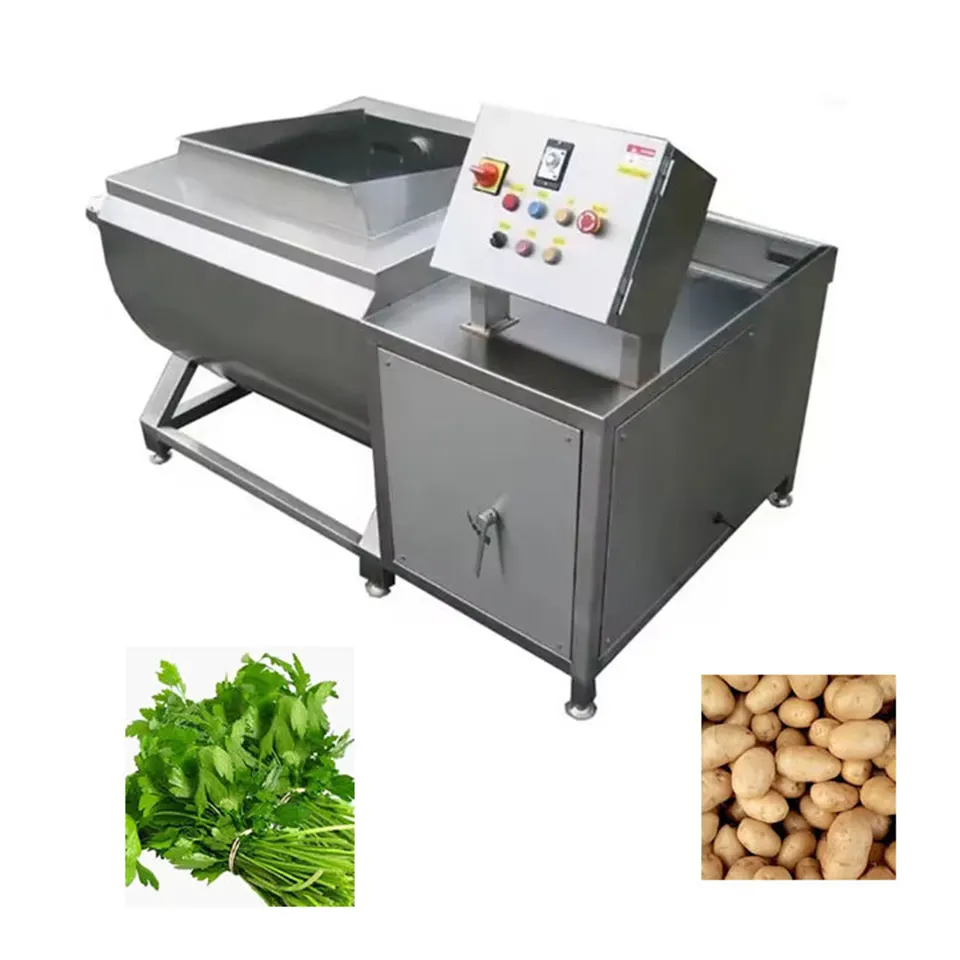
Fresh-cut vegetable preparation looks simple from the outside: produce comes in, gets washed, gets cut, gets dried, gets packed. The awkward part is never the machines themselves — it is the seams between them. A washer that dumps a wet 25 kg load onto a cutting table changes how that table is staffed, how fast knives move, and how much water ends up in the dewatering basket. Following one load of produce from the receiving door to the dryer explains what the washing stage actually hands to the next station, and why a batch machine belongs in a different planning conversation than a continuous fresh-cut line.
| Batch capacity | 20–30 kg per cycle |
|---|---|
| Cycle time | 3–5 minutes |
| Body material | 304 stainless steel |
| Footprint | 1750 × 1100 × 1100 mm |
| Power supply | 380V / 50Hz |
| Upstream | Receiving and bulk staging |
| Downstream | Cutting and dewatering |
Where a Batch Washer Sits Between Receiving and Cutting
Receiving is dry, counting work. Crates arrive, weights get checked, damaged produce gets pulled, and the load waits its turn. Washing is the first wet step in the chain, which makes it the natural border between the soil side of the room and the food side. Everything upstream handles field soil, field heat and packaging; everything downstream handles produce that will be cut and packed. Placing that border correctly is the single most consequential layout decision in fresh-cut prep, because it decides how people walk, where water drains, and where clean containers are allowed to sit. The washer's real job inside that border is to turn a variable incoming load into a predictable outgoing one. A machine rated at 20–30 kg per cycle with a 3–5 minute cycle gives the rest of the room a known unit of work: one load in, one load out, roughly a dozen loads an hour at the fast end. That number becomes the beat that cutting and dewatering are planned around, far more than any headline throughput figure. TY106 is one example of this machine type — a batch washer built on a 304 stainless steel body with a 1750×1100×1100 mm footprint, sized for a room rather than a factory hall.
1. Receiving Sets the Batch Size the Washer Can Work With
Produce arrives in whatever crate, bin or sack the grower or market used, and those containers rarely match the washer's rated load. A 20–30 kg per cycle capacity is what lets an operator line the two up: one crate usually equals one cycle, so nobody is splitting loads by hand at the tub edge. When incoming crates are heavier than the cycle rating, the operator either fills partially and stores the remainder, or holds two crates for three cycles. That mismatch is where bottlenecks and bruised produce start, and it is worth checking before the machine is ordered.
2. Washing Marks the Handoff From a Dirty Zone to a Clean Zone
Good agricultural practice guidance treats postharvest washing as a controlled handling step rather than a rinse, precisely because water is both a cleaning medium and a carrier. The moment produce leaves the tub it is wet, cleaner and dripping, and clean containers, clean hands and clean knives take over. That is why hygienic engineering guidance for food equipment puts weight on smooth, drainable, easily cleaned food-contact surfaces — the washer body is the last thing the dirty load touches. TY106 uses 304 stainless steel for that reason: it survives daily wet cleaning and resists the corrosion that shortens the life of painted or mild-steel frames.
How Wash Water and Wet Produce Affect the Next Prep Station
Wet produce behaves differently from dry produce, and every cutting table feels it. Leaves cling to each other and slide across the board; root vegetables roll instead of sitting still; pieces clump in the chute and need a hand to break them apart. Knife action also changes — a wet leaf tends to fold under the blade instead of being cut cleanly, which produces ragged edges that brown faster in the pack. None of this is a defect in the washer. It is simply the physical state the washing stage hands downstream, and the cutting station has to be set up for a wet product rather than a dry one. Water also travels. Surface water leaving the tub carries loose soil and plant debris with it, so anything the wet load touches becomes part of the wash zone in practice. That has two consequences worth planning for. First, the transfer between washer and cutting table should be short and drained, not a long open run where water pools on the floor. Second, wash water itself loads up with soil through the shift, so a batch machine's natural rhythm — drain, refill, reload — is also the moment to refresh water between loads rather than pushing the same tub all morning. Dewatering is the step that turns this around, and its position in the flow matters. For shredded or cut salad items, a spin or centrifugal dewatering stage usually follows cutting, because cut surfaces release water and the pack needs to be dry. For whole or coarse-cut items going straight to packing, dewatering can sit directly after washing. Either way, the batch washer sets the timing: produce arrives at the next station in pulses of 20–30 kg rather than as a steady stream, so the cutting table and the dryer both need enough buffer to absorb a wave and then wait. A crew that is sized for continuous flow will stand idle between loads; a crew sized for the pulse stays busy.
Why a Batch Washer Is Not a Continuous Fresh-Cut Line
A continuous fresh-cut line moves produce on a belt through spray bars, brushes or a flume at a steady rate, with every unit in the chain sized to the same throughput. It is a genuinely different piece of engineering: conveyors link the stages, water is recirculated and filtered continuously, and the whole arrangement is designed as one system with matched speeds. That kind of line makes sense at volumes where stopping is expensive, and it demands plant engineering work — floor falls, drainage capacity, electrical distribution, conveyor integration — before the first crate goes in. A batch washer works on the opposite principle. It fills with a fixed load, agitates for 3–5 minutes, drains, unloads, and repeats. On TY106 that load is 20–30 kg, driven by a 2HP water pump and a 1HP hydraulic pump on a 380V/50Hz supply. The machine is self-contained: it does not need conveyors to function, and an operator with a crate and a drain can run it. That is exactly why it suits fresh-cut rooms handling several produce types through the day, where a box of leafy greens is followed by carrots and then by something else entirely. A continuous line resents that kind of changeover; a batch tub simply gets a refill. The practical point is that one batch washer is a washing node inside a longer chain, and the chain is what has to work. How fast produce moves to the cutting table, whether a dewatering unit sits before or after the knife, how many people stand at the table, and where the drains run are all decisions that belong to the room, not to the washer. Capacity balance across washing, cutting and dewatering, conveyor integration, and site utilities are separate engineering reviews, usually done with the layout drawing open rather than the machine specification.
Conclusion
Fresh-cut vegetable preparation is a chain of handoffs, and the washing stage is the one that changes the state of the product most: from dry and dirty to wet and clean. Placing that stage between receiving and cutting, sizing the receiving crates against the washer's load, and planning the cutting table and dewatering step around a wet, pulsed delivery is what makes the flow work. A batch machine like TY106 handles 20–30 kg per 3–5 minute cycle on 380V/50Hz and fits a room-scale operation that changes products through the day. Readers comparing food processing machinery can review the TY106 listing to check the batch specifications against their own prep sequence, and treat line design and capacity balance as a separate conversation.
FAQ
Q: Where does a vegetable washer fit in a fresh-cut produce preparation line?
A: It sits between receiving and cutting, as the first wet step in the chain and the border between the soil side and the food side of the room. Receiving brings in dry, variable loads; the washer converts them into a predictable clean load; cutting then works on wet produce. That handoff is the main layout decision, because it decides traffic, drainage and where clean containers are allowed.
Q: How does wet produce from a batch washer affect cutting and drying steps?
A: Wet produce is slippery, clumps together and tends to fold under a knife instead of cutting cleanly, so the cutting table and blades need to suit a wet product. Water also carries loose soil onward, so the transfer should be short and drained. Dewatering usually follows cutting for shredded salad items and can follow washing for coarser cuts, and it has to absorb the pulse of a 20–30 kg batch arriving at once.
Q: Is a batch vegetable washer the same as a continuous fresh-cut processing line?
A: No. A continuous line moves produce on a belt at a steady rate with every unit matched to the same throughput and conveyor-linked stages. A batch washer fills, agitates for 3–5 minutes, drains and unloads a fixed load of 20–30 kg, then repeats. It works as a standalone washing node, while a continuous line is a full system that needs plant-level engineering.