
304 stainless steel vegetable washers for wet packing rooms: TY106 body, 380 kg frame, 1750×1100×1100 mm footprint, 380V/50Hz, 2HP water + 1HP hydraulic pump.
A 304 stainless steel body, a 380 kg frame, and a compact footprint shape how a commercial vegetable washer handles washdown, installation, and long-term cleaning in a wet packing room.
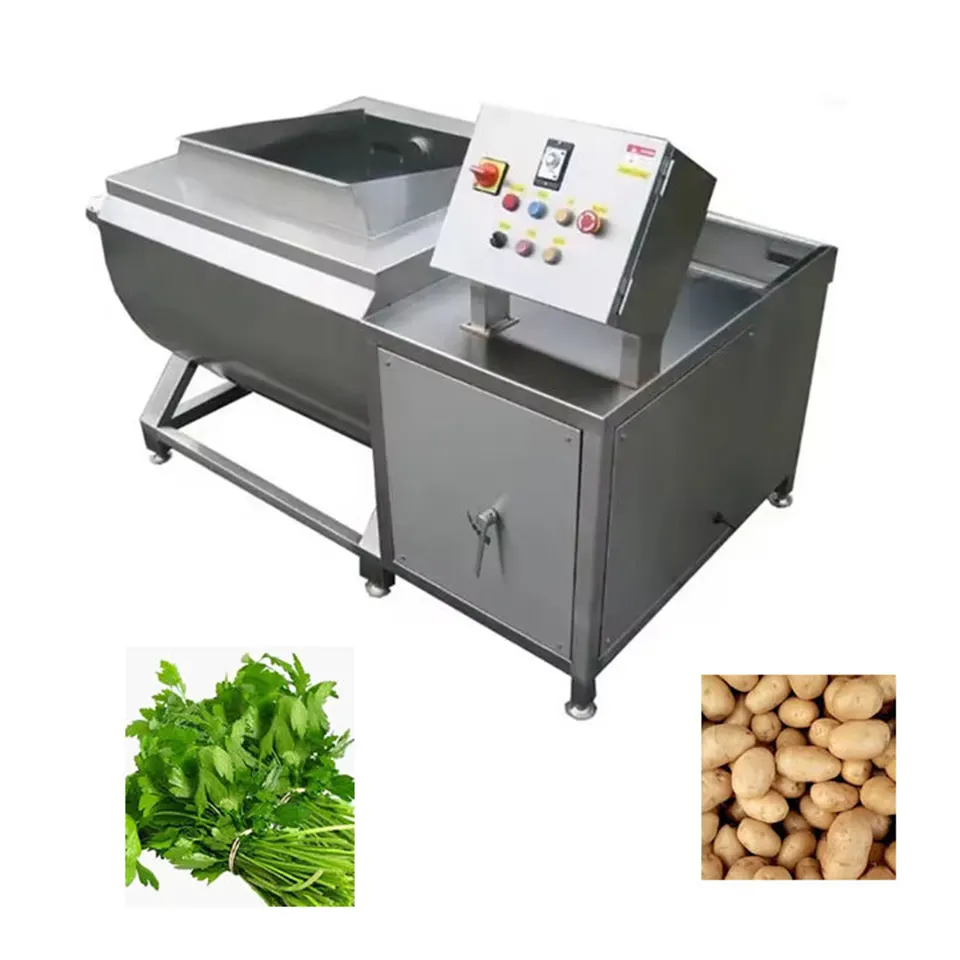
Packing facility teams compare a commercial vegetable washer when the floor stays wet, produce residue collects around the frame, or a replacement must fit an existing wet zone without stopping the line. The decision affects cleaning time, floor loading, service access, and how confidently the team can wash down the room after each shift. The review below focuses on the wet room: what the steel must handle, what daily cleaning demands, and what a 380 kg machine means for installation.
| Body material | 304 stainless steel |
|---|---|
| Installed weight | 380 kg |
| Footprint (L × W × H) | 1750 × 1100 × 1100 mm |
| Power supply | 380V / 50Hz |
| Water pump | 2 HP |
| Hydraulic pump | 1 HP |
| Batch capacity | 20–30 kg per cycle |
Why wet packing areas put more stress on washer materials
A wet packing room exposes a washer to water, produce residue, and cleaning chemicals throughout the shift. Leaf fragments, soil, pulp, and fine solids land on the frame, splash onto tank edges, and settle in low spots. Washdown water carries those solids into joints and around feet, then the room dries and the cycle begins again. Stainless steel gives the structure a cleanable surface, and the machine layout must let staff rinse, reach, and maintain the equipment between shifts. Cleaning guidance from the British Stainless Steel Association makes the practical point that deposits and residues should be removed routinely instead of left on the surface. The mechanical stress is just as important. A batch washer takes a load, moves water through the tank, and runs a pump and hydraulic unit behind panels or near the floor. That creates vibration, splash, and small movements at the frame. Packing floors are often wet and slightly uneven, and staff move bins, hoses, and pallets around the machine. A light frame can flex under that routine load; a heavier frame holds its shape and keeps the tank, pump area, and panels aligned. Material choice and structural weight therefore belong in the same conversation. The 304 stainless steel body gives wet-area surfaces a cleanable material, while the 380 kg build gives the machine mass to sit steadily during daily packing-room use. Food-contact design matters because produce touches the tank and nearby surfaces, and the machine is cleaned between batches and at the end of the day. FDA 21 CFR Part 117 sets out general food-contact surface and sanitary design principles: food-contact surfaces should be cleanable and maintained in sanitary condition. EHEDG guidance adds a hygienic-engineering view: equipment should be designed so cleaning is practical. In a packing facility, that means asking whether operators can reach corners, whether water drains away from the frame, and whether ledges can hold produce bits after washdown. The material grade starts the answer, while construction details determine how well the machine performs in a wet room.
What 304 stainless steel changes in daily cleaning and food contact
A 304 stainless steel washer in a packing facility depends on how the material is built into the machine. For food processing machinery used in a wet room, four points matter when comparing a stainless steel commercial vegetable washing machine with a painted or lighter-duty unit:
Material grade. TY-106 uses a 304 stainless steel body. The wet-area structure has a stainless surface rather than a painted finish that can chip at edges, bolt heads, and frame joints.
Cleanable joints and corners. Ask for drawings showing how the tank, frame, and pump area meet. Produce bits and wash water collect in ledges, open box sections, and tight corners, so joint design must match the washdown routine.
Surface condition. Confirm the finish and fabrication standard in writing. A cleanable surface should let brushes and cloths reach the steel without snagging and allow rinse water to drain rather than sit in low spots.
Frame support. The 380 kg build carries the washing action and pump vibration. A rigid frame keeps the tank and moving parts aligned when the floor is wet and the machine is loaded shift after shift.
Start with material grade: 304 stainless steel is the specified material for the TY106 body. Treat it as a material choice and confirm surface finish, weld details, cleaning validation, lead time, and warranty terms in writing. In a packing room, the body meets water, produce acids, mild cleaning chemicals, and repeated washdown. Stainless steel is used in food equipment because it can be cleaned and kept in service in wet conditions, yet fabrication determines the difference between two 304 machines. Open frame ends, exposed bolt threads, and ledges that hold pulp add cleaning time; planned joints and a confirmed surface standard help water and cleaner reach the steel, lift residue, and rinse away. Show those details in the drawings and agree them before the order is placed. Frame support connects material to working life. The TY-106 weighs 380 kg, and that mass supports cleaning and durability. A heavier frame is less likely to shift when the tank is loaded or a hose is pulled around the base. It also gives the 2HP water pump and 1HP hydraulic pump a stable mounting point. Service access around the pumps belongs in the installation plan from the start.
How 380 kg frame weight and compact footprint affect installation
At 380 kg, the TY106 needs a planned delivery route, a suitable floor, and enough clearance for cleaning and service. The footprint is 1750 × 1100 × 1100 mm, compact enough for a defined wet zone but large enough to check the room layout before delivery. The machine runs on 380V/50Hz with a 2HP water pump and 1HP hydraulic pump, so the electrical supply, isolation point, and pump access should be checked against the site. Floor loading comes first. Confirm that the slab and floor finish can support 380 kg, including how load transfers through the feet or frame contact points. Wet packing floors can be sloped, tiled, coated, or built over a drain. A structural engineer or site maintenance lead is worth checking the slab can take the load and that the machine can sit level without rocking. A level base helps the washer run quietly, keeps the tank aligned, and lets washdown water flow toward the drain instead of pooling under the frame. Movement and service clearance come next. Use the right equipment and a route that accounts for door widths, turns, thresholds, and ramps. Once in place, the machine needs room to load and unload, for hoses to reach the tank, and for a technician to inspect the pump area. The 1750 mm length and 1100 mm width give a compact working shape, but cleaning access around the frame matters as much as the dimensions. Leave a planned gap for cleaning and service, and mark the final position on the floor plan before fixing electrical and water connections. Stability in daily use depends on the floor and feet as well as the frame. The machine should sit flat, with no rocking and no soft patches under the frame. In a wet room, the floor finish and drainage slope change how water behaves around the feet. After placement, run water and check where it drains, where residue collects, and whether the operator can reach wet areas with a brush and hose. A stable, accessible machine is easier to keep clean.
Conclusion
For a packing facility, a 304 stainless steel vegetable washer is a material and structure decision before it is a capacity decision. The TY106 provides a 304 stainless steel body, a 380 kg frame, a 1750 × 1100 × 1100 mm footprint, and a 380V/50Hz configuration with a 2HP water pump and 1HP hydraulic pump. These details help the maintenance and procurement team judge floor loading, delivery route, cleaning access, and service space. Huayi Equipment can support the next step with the TY-106 specification and a written quotation discussion. Send your floor plan, drain position, power supply, and washdown routine, then ask for written confirmation of the 304 body scope, frame and feet drawings, pump access, installation weight, MOQ, lead time, and warranty terms.
FAQ
Q: Is 304 stainless steel enough for a vegetable washer in a wet packing facility?
A: For a wet packing facility, 304 stainless steel is a suitable starting material because it gives the TY-106 body cleanable stainless surfaces for food-contact areas and routine washdown. The grade is only the starting point: joint design, surface condition, frame construction, and the cleaning method determine how well the machine performs in daily cleaning. Ask for those details in the written specification.
Q: What does a 380 kg machine weight mean for floor loading and stability?
A: The 380 kg weight gives the washer mass for stable operation, but it also makes floor and route checks essential. Confirm that the slab and floor finish can support the machine, including the feet or frame contact points. Also confirm the delivery route, leveling, and clearance for cleaning and pump access. The TY-106 footprint is 1750 × 1100 × 1100 mm.
Q: Which material and structure details should I request from a vegetable washer factory?
A: Ask for the written material grade for the body and food-contact parts, tank and frame joint drawings, the finish and fabrication standard, frame and feet details, installation weight and dimensions, pump access and electrical/drain requirements, and the recommended cleaning method. Include MOQ, lead time, and warranty terms in the quotation package. Huayi Equipment can provide the TY-106 specification as the starting point for written confirmation.